Either We Contribute to Restoration or We Contribute to the Dysfunction
“For God is not the author of confusion, but of peace…”
1 Corinthians 14:33, KJV
Some families don’t fall apart loudly.
There is no dramatic announcement. No official ending. No funeral. No final goodbye.
People simply stop speaking.
One relative stops coming around. Children who once played together stop seeing each other. Birthdays happen separately. Holidays become complicated. Grandparents move between households carrying stories from one side of the family to the other.
And eventually, everyone learns how to function around the fracture.
But functioning around dysfunction does not make it functional.
Sometimes we become so accustomed to brokenness that we stop asking why we’re still accepting it.
Grieving People Who Are Still Alive
There is a particular kind of grief that comes when someone you love is still living.
You know they’re somewhere laughing, celebrating birthdays, raising children and continuing with life.
But you no longer have access to them.
And when children are involved, that grief can multiply.
You may grieve nieces, nephews, grandchildren, siblings, cousins, godchildren, or entire relationships that disappeared because two adults could no longer find their way back to one another.
There is no funeral for this kind of loss.
There are no sympathy cards.
People may even tell you, “They’re still alive.”
But that’s exactly what makes the grief so complicated.
They are alive.
And yet something has died between you.
Families Can Normalize Almost Anything
One of the most dangerous things a family can do is become comfortable with dysfunction.
Instead of addressing the fracture, everyone begins arranging themselves around it.
“Don’t invite them at the same time.”
“Don’t mention that around her.”
“I’ll take the children over there.”
“Let’s just keep the peace.”
But sometimes what we call keeping the peace is actually maintaining the dysfunction.
Peace and avoidance are not the same thing.
Scripture tells us:
> “For God is not the author of confusion, but of peace…”
> 1 Corinthians 14:33, KJV
If a family structure requires constant maneuvering, secrecy, separate gatherings, indirect communication and children navigating adult disagreements, perhaps the question shouldn’t only be, “How do we keep everyone comfortable?”
Perhaps the question should become:
“What are we doing to restore what has been broken?”
Restoration Does Not Mean Pretending
Restoration doesn’t require pretending nobody was hurt.
It doesn’t mean forgetting what happened.
It doesn’t mean surrendering boundaries so everyone can take a beautiful family photograph.
Sometimes restoration begins with an uncomfortable acknowledgment:
Something is wrong here.
Then somebody has to decide whether they will contribute to healing the fracture or simply learn how to live around it.
Parents can do this.
Siblings can do this.
Grandparents can do this.
Adult children can do this.
Every person involved has a choice about what they carry into the family system.
Will I carry gossip?
Will I carry messages between people who should be communicating directly?
Will I validate harmful behavior because confronting it makes me uncomfortable?
Will I use children as bridges between adults who refuse to speak?
Or will I become someone who says:
Enough. There has to be a healthier way.
Sometimes Love Needs a Boundary
Choosing restoration does not mean giving everyone unrestricted access to you.
Sometimes the most restorative thing you can do is refuse to participate in an unhealthy arrangement.
A boundary says:
I love you, but I will not help dysfunction become normal.
There is a difference between punishment and protection.
There is a difference between bitterness and discernment.
And there is a difference between closing a door forever and saying:
This door requires a different way of entering.
Sometimes the doorway is accountability.
Sometimes it is a conversation.
Sometimes it is an apology.
Sometimes it is simply the willingness to sit across from another person and say, “We remember this differently, but I don’t want our family to spend another decade living inside this fracture.”
That is where restoration can begin.
You Are Allowed to Grieve
And if reconciliation doesn’t happen?
Grieve.
Grieve the relationship you had.
Grieve the relationship you thought you would have.
Grieve the children you haven’t watched grow.
Grieve the holidays that changed.
Grieve the sibling who is alive but absent.
Grieve the version of your family that exists only in photographs now.
You don’t have to call something a death to acknowledge that you experienced a loss.
But grief doesn’t require you to chase someone who has chosen distance.
You can leave room for restoration without spending your life standing at the door waiting.
You can pray.
You can forgive.
You can heal.
You can maintain your boundaries.
You can continue living.
And you can remain open to the possibility that one day someone may decide they are tired of carrying the division too.
Someone Has to Stop Drinking the Spoiled Milk
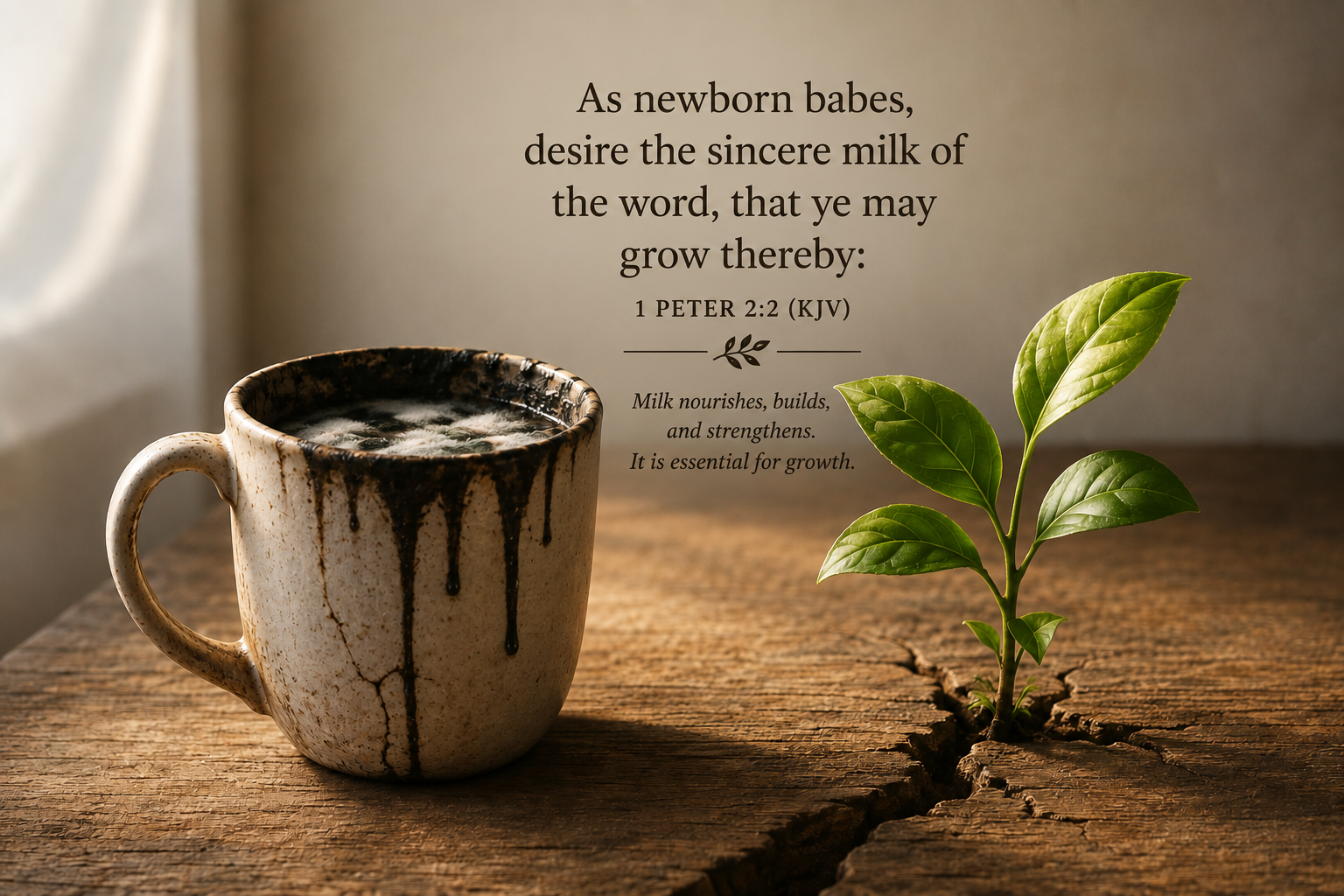
Years ago, someone close to me dreamed that she was preparing to drink milk that had turned black and rotten.
Before she drank it, she heard a woman’s voice ask:
“Why are you going to drink that?”
That question has stayed with me.
Because families can become accustomed to consuming things that stopped nourishing them years ago.
Division.
Silence.
Resentment.
Denial.
Avoidance.
We swallow it because it has been sitting on the family table for so long that nobody remembers who poured the first glass.
But eventually somebody has to look into the cup.
Eventually somebody has to acknowledge:
This is no longer nourishing us.
And perhaps restoration begins right there.
Not with determining who gets blamed for spoiling the milk.
Not with pretending the milk is fine.
Not with demanding that everyone drink it because “that’s just how this family is.”
It begins when somebody finally decides:
I will not consume dysfunction simply because it is familiar.
Either we contribute to restoration, or we contribute to maintaining the dysfunction.
And sometimes the first person who chooses restoration is simply the person brave enough to stop drinking.